Shingles in Singapore: Symptoms, Risks, Treatment & Vaccine Guide
`
Shingles in Singapore: Symptoms, Risks, Treatment & Vaccine Guide
Shingles is a painful rash caused by the same virus that leads to chickenpox. Even after you recover from chickenpox, the virus remains in your body and can reactivate years later as shingles.
In Singapore, shingles is more common than many people think—and understanding it is key to prevention and early treatment.
What Is Shingles?
Shingles (also known as herpes zoster) occurs when the chickenpox virus reactivates in the body. This can happen decades after the initial infection, often when the immune system becomes weaker.
How Common Is Shingles in Singapore?
Shingles affects a significant portion of the population:
Nearly all Singaporeans carry the chickenpox virus
1 in 3 people will develop shingles in their lifetime
1 in 3 shingles patients experience long-term pain lasting more than 3 months
This makes shingles a major health concern, especially for older adults.
Shingles Symptoms and Complications
Shingles typically presents as a painful rash, but it can also lead to serious complications.
Common symptoms:
Pain, burning, or tingling sensation
Red rash that develops into fluid-filled blisters
Sensitivity to touch
Possible complications:
Long-term nerve pain (Post-herpetic neuralgia)
Vision loss, if the eyes are affected
These complications can persist long after the rash heals and may significantly affect daily life.
Who Is at Risk of Shingles?
Certain groups are more likely to develop shingles:
Adults aged 50 years and older
Individuals with weakened immune systems (e.g. due to medical conditions or treatments)
As immunity declines with age, the risk of shingles increases.
Is Shingles Contagious?
Shingles itself is not directly contagious, but the virus can still spread:
You cannot catch shingles from someone with shingles
However, you can get chickenpox from someone with shingles or chickenpox
Once infected, the virus remains in your body and may later cause shingles
Shingles Treatment Options
Early treatment is important for better outcomes.
A course of antiviral medications can:
Reduce the severity of symptoms
Shorten the duration of the illness
Lower the risk of long-term complications
Seek medical attention as soon as symptoms appear for the best results.
Vaccination is the most effective way to prevent shingles and its complications.
How Many Doses Are Needed?
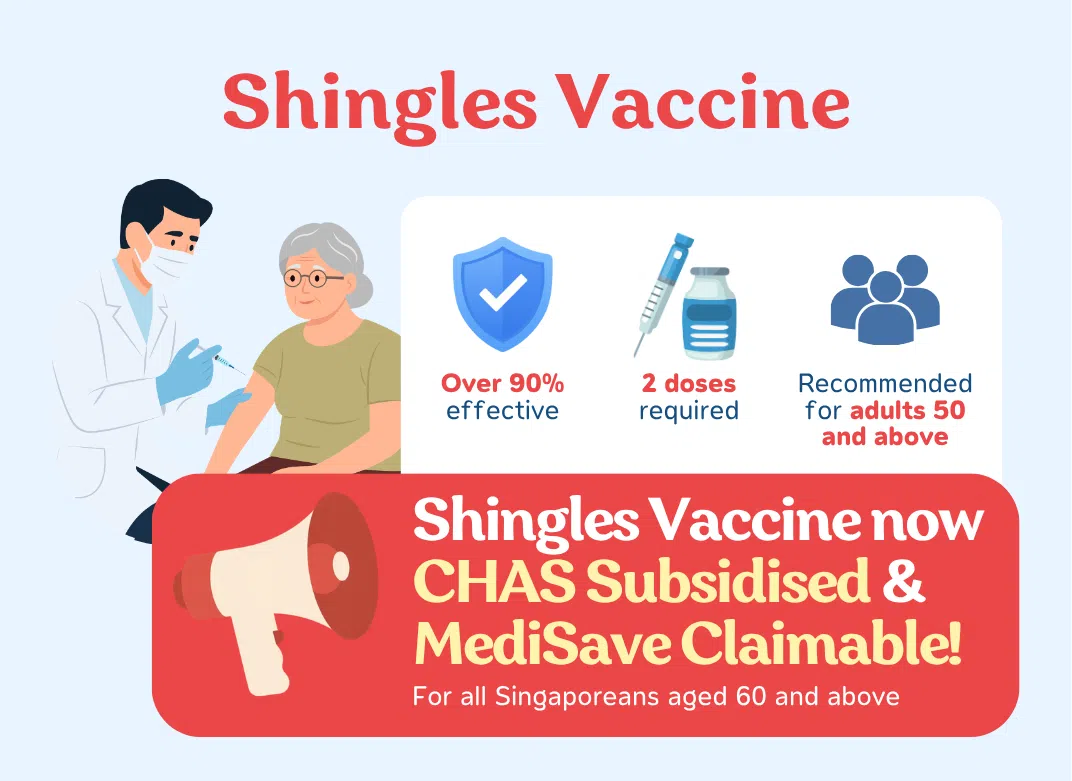
The shingles vaccine is given in two doses. The second dose is given 2 to 6 months after the first.
How Effective Is the Shingles Vaccine?
The vaccine offers strong protection:
Over 90% effective in preventing shingles
Reduces the risk of complications such as long-term nerve pain
Do You Need a Booster?
Currently, guidelines do not recommend the need for any booster, as protection remains strong for years after completing both doses.
Should You Get Vaccinated If You’ve Had Shingles Before?
Yes! Even if you’ve had shingles before, it can come back!
Vaccination helps reduce the risk of recurrence.
What If You’re Not Sure You Had Chickenpox?
You should still get vaccinated!
Most adults have already been exposed to the chickenpox virus at some time in their lives
The shingles vaccine is still recommended even if you don’t remember having chickenpox
You do not need a blood test to check if you have had chickenpox before
Who Should Get the Shingles Vaccine?
The vaccine is recommended for:
Adults aged 50 and above
Those with weakened immune systems
Shingles Vaccine Cost in Singapore (CHAS & MediSave)
For the following groups, the shingles vaccine is subsidized under CHAS, and MediSave can be used to pay for remaining costs after subsidies:
Singaporeans aged 60 and above
Singaporeans aged 18-59 with medical conditions causing immunosuppression e.g. leukemia, HIV
Singaporeans aged 18-59 on medical treatment causing immunosuppression e.g. chemotherapy/ radiotherapy/ immunosuppressants
Shingles is a common and potentially serious condition in Singapore, especially as you age. While treatment can help, there is still a risk of complications and recurrence, and prevention through vaccination is the most effective strategy.
If you are 50 or older, or have a weakened immune system, book an appointment with us to speak to your doctor about getting the shingles vaccine!
Dr Amaris is a Family Physician at Frontier Healthcare with a special interest in Sports Medicine. She also contributes as one of the Core Faculty for the Family Medicine Residency Program with the National University Health System (NUHS). She currently practices at Canberra and Bukit Batok.

 E-Store
  Contact Us