Health Resources
- Home
- Health Resources
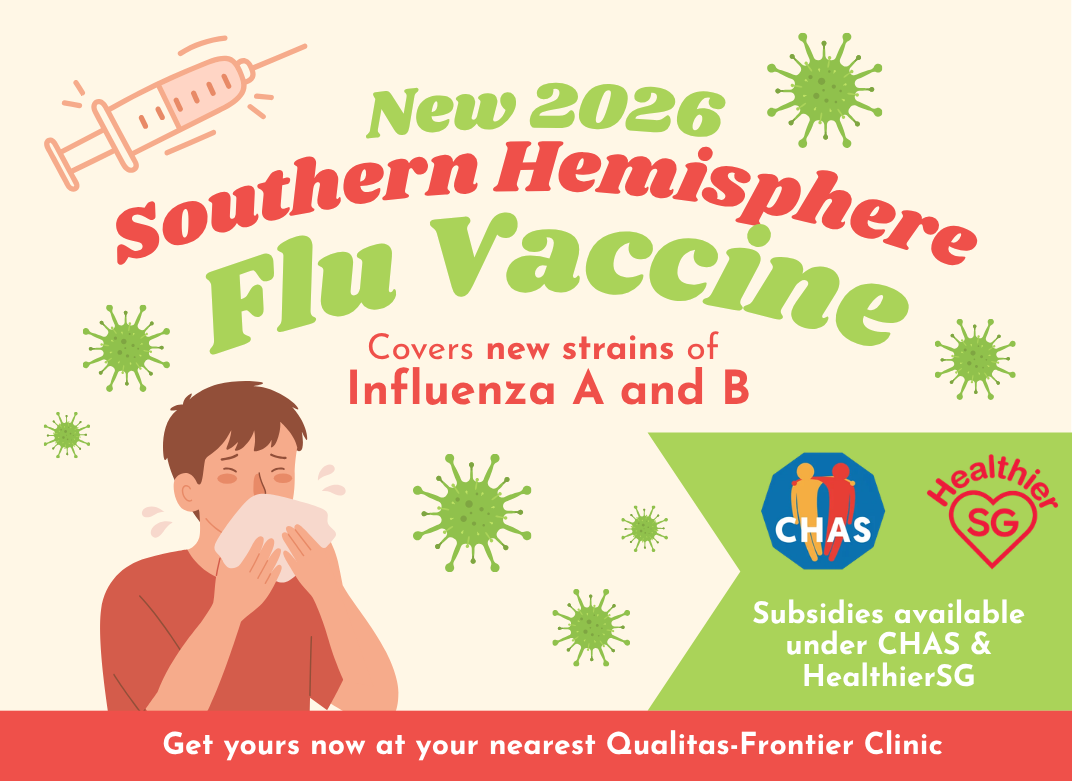
- New 2026 Southern Hemisphere Flu Vaccines: What You Need to Know
New 2026 Southern Hemisphere Flu Vaccines: What You Need to Know
How Serious is Influenza?
Influenza (or the flu) is an infection of the respiratory tract caused by influenza viruses. It is a common infection and affects all parts of the world.
Every year, there are around:
- 1 billion cases of seasonal influenza
- 3–5 million cases of severe illness
- 290 000 to 650 000 deaths caused by influenza
What does the flu vaccine do?
The flu vaccine helps to protect us against influenza viruses. It works by training our immune system to recognise and fight specific flu strains before we are exposed to them.
After vaccination, our body produces antibodies that can:
- Reduce our chances of getting the flu
- Make our symptoms milder even if we do fall sick
- Lower the risk of complications of influenza such as lung infection or hospitalisation
This is especially important for older adults, young children, and people with chronic medical conditions.
Why are there 2 new flu vaccines every year?
Flu viruses are constantly mutating, and new strains circulate each year. As such, the composition of the flu vaccines must also be updated regularly.
Experts from the World Health Organization study data on the flu strains circulating globally, and update the flu vaccines twice a year to counter the latest strains of influenza viruses:
- Once for the Northern Hemisphere and once for the Southern Hemisphere
- Each version is designed to match the strains expected to circulate during that season
For countries like Singapore, which has year-round travel and flu activity, experts may recommend the latest available vaccine for better protection if the strains have changed.
Do I need to get every new flu vaccine?
You may not necessarily require each new flu vaccine, but regular vaccination is strongly recommended.
Flu vaccines are generally advised once a year for most people, as:
- Immunity from the vaccine decreases over time
- Circulating strains of influenza may change
However, in some cases, your doctor may advise you to receive an updated flu vaccine—even if you already had the previous season’s vaccine – if there are significant changes in the strains included.
Do I need to get the new 2026 Southern Hemisphere flu vaccine?
The composition of the new 2026 Southern Hemisphere vaccine (covering the April to September 2026 flu season) is different from the 2025/2026 Northern Hemisphere vaccine (covering the October 2025 to March 2026 flu season).
As such, those who received the 2025/2026 Northern Hemisphere flu vaccine are still recommended to get the updated 2026 Southern Hemisphere flu vaccine.
Can I still fall sick after getting the flu vaccine?
It is still possible to fall sick after getting the flu vaccine.
Many different viruses can cause symptoms such as cough, runny nose, and sore throat, and the influenza vaccine does not protect against these other viruses.
The flu vaccine protects against the most common strains of influenza expected that season, but there are still multiple other strains of flu virus that may be circulating.
However, even if you do contract influenza after vaccination, it is usually:
- Milder
- Shorter in duration
- Less likely to cause complications
Does the flu vaccine cause flu symptoms?
The flu vaccine injection does not cause flu symptoms or give you a “mild version” of the flu.
However, other side effects can occur, including:
- Low grade fever
- Body aches
- Headache
- Fatigue
These side effects are generally short-lasting and mild.
How long does the flu vaccine take to work?
After receiving the flu vaccine, it takes about 2 weeks for the body to develop antibodies against the influenza virus.
It is best to get your flu vaccine early in the flu season, and at least 2 weeks before you travel!
What are the subsidies available for the flu vaccine?
The influenza vaccine is subsidised under the Community Health Assist Scheme (CHAS) at all our clinics.
Patients enrolled to our clinics under HealthierSG may also be eligible for additional subsidies.
The flu vaccine is fully subsidized for Singaporeans who are:
- Aged 65 and above (HealthierSG enrolees)
- Aged 18 to 64 with certain chronic medical conditions (HealthierSG enrolees)
- Aged 6 months to 59 months (under CHAS)
To find out more about the new 2026 Southern Hemisphere flu vaccines, consult with one of our family doctors today!
Author
Dr Amaris Lim
MBBS, MMed (Fam Med), GDip (Sports Med)
Dr Amaris is a Family Physician at Frontier Healthcare with a special interest in Sports Medicine. She also contributes as one of the Core Faculty for the Family Medicine Residency Program with the National University Health System (NUHS). She currently practices at Canberra and Bukit Batok.