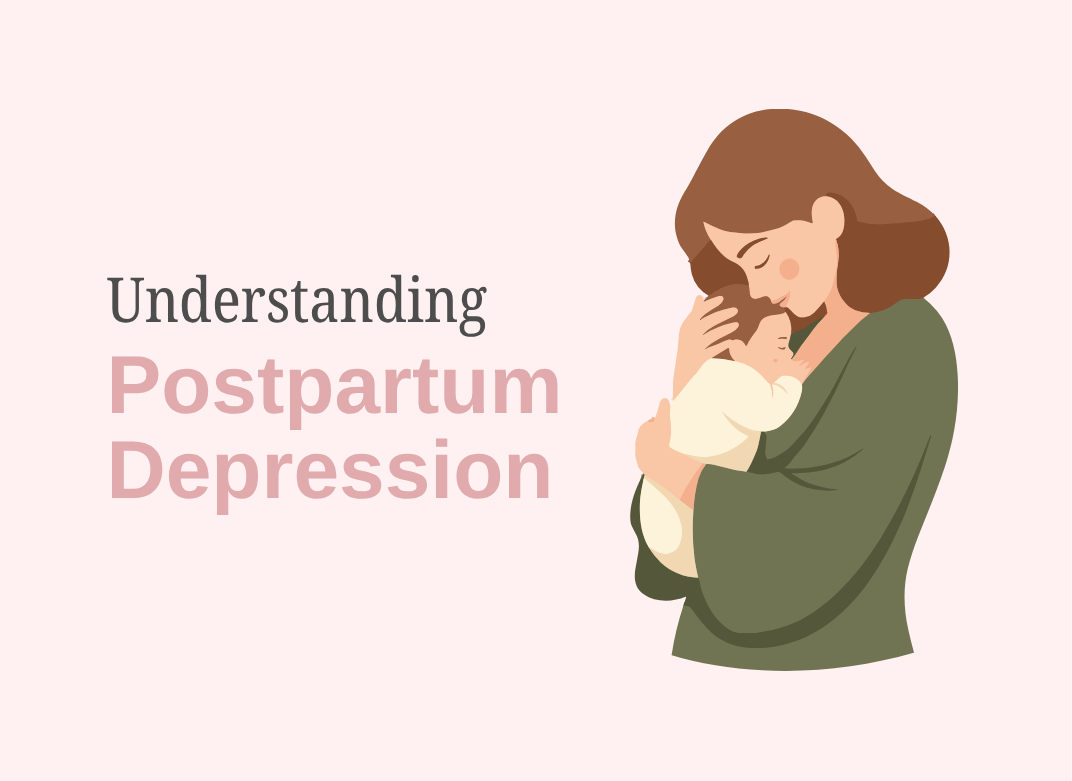
Welcoming a new baby is often portrayed as a time of pure bliss, but for many parents, the reality is much more complex. While the “baby blues” (mild anxiety, low mood and tearfulness) are common in the first week, Postpartum Depression (PPD) is a more serious, long-lasting condition that requires support and treatment.
What is Postpartum Depression?
Postpartum Depression is a clinical mood disorder that affects mothers after childbirth. Unlike the baby blues, which usually fade within 2 weeks, PPD involves intense feelings of sadness, anxiety, and fatigue that can interfere with your ability to care for yourself or your baby. These feelings can last for months or years. PPD affects about 10-15% of women following childbirth.
Signs and Symptoms
Symptoms vary from person to person, but common signs include:
Persistent Sadness: Feeling “empty,” hopeless, or uncontrollable crying.
Withdrawal: Losing interest in activities you used to enjoy or withdrawing from friends and family.
Detachment from baby: Feeling disconnected from your baby or worrying that you don’t love them.
Fatigue: Severe exhaustion (beyond normal sleep deprivation)
Intrusive Thoughts: Thoughts about hurting yourself or the baby.
Risk Factors
While PPD can happen to anyone, certain factors may increase the likelihood:
A personal or family history of depression or bipolar disorder
High levels of stress (financial, relationship, or work-related)
Lack of a strong support system
Complications during pregnancy or childbirth
Difficulty with breastfeeding
Treatment and Recovery
The prognosis for PPD is generally good with early support and intervention. With professional help, most people’s symptoms improve and they go on to enjoy a healthy bond with their child. Treatment is usually a combination of strategies:
1. Medical Treatment
Doctors may prescribe antidepressants that are safe to take while breastfeeding. These help balance brain chemistry to lift your mood and reduce anxiety.
2. Counseling and Therapy
Talking to a professional is one of the most effective ways to manage PPD. Cognitive Behavioral Therapy (CBT) and Interpersonal Therapy (IPT) are common approaches.
Therapy provides a safe space to process your emotions without judgment. It helps you develop coping mechanisms, manage intrusive thoughts, and set realistic expectations for parenthood.
3. Lifestyle and Support
Increasing support for the new mother – such as getting help with chores, joining a support group for new parents, and getting as much rest as possible—can significantly speed up recovery.
When to See a Doctor
You should reach out to your primary care doctor if:
Your symptoms last longer than two weeks
You find it difficult to perform daily tasks or care for your baby
The feelings of sadness or anxiety are getting worse, not better
If you are having thoughts of harming yourself or your baby, please reach out for immediate help at 1767 (Samaritans of Singapore 24-hour Hotline) or 9151 1767 (24-hour Whatsapp).
How We Can Help
Your healthcare team is your strongest ally in navigating this journey toward recovery.
Our doctors are experienced in identifying the early signs of postpartum depression and can work with you to create a personalized management plan, whether that involves medical treatment, lifestyle adjustments, or specialized referrals.
To ensure you have the emotional support you deserve, we offer a dedicated counselling service staffed by trained clinical psychologists who specialize in maternal mental health.
Reaching out is a sign of strength, and we are here to support you every step of the way.
Author
Dr Amaris Lim
MBBS, MMed (Fam Med), GDip (Sports Med)
Dr Amaris is a Family Physician at Frontier Healthcare with a special interest in Sports Medicine. She also contributes as one of the Core Faculty for the Family Medicine Residency Program with the National University Health System (NUHS). She currently practices at Canberra and Bukit Batok.

 E-Store
  Contact Us
  Download App